Industrial floors under constant pressure
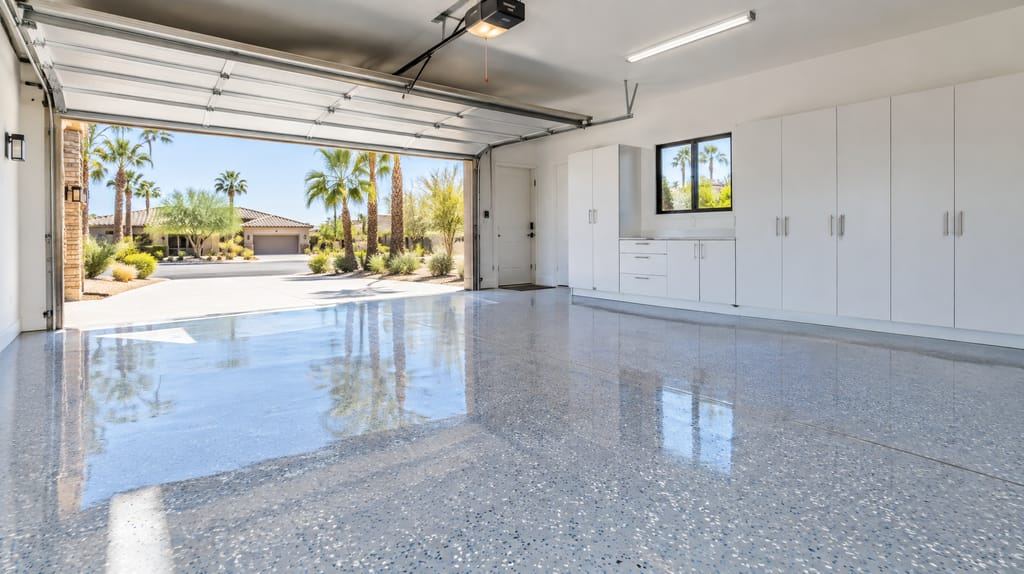
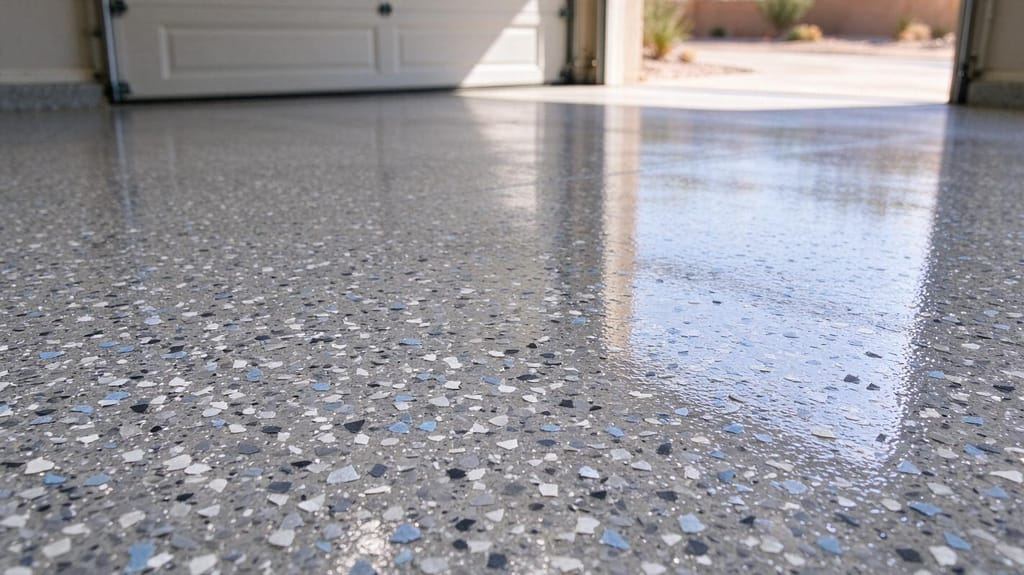
Warehouse floors take more punishment than almost any other surface. Forklifts, pallet jacks and carts cross them all day. Pallets are dropped and dragged, and fluids, chemicals and debris end up on the floor. Bare concrete in these environments dusts, stains, wears and spalls at joints, and the dust it creates gets into products, equipment and the air employees breathe. A professionally installed warehouse coating solves these problems while improving safety, visibility and organization.
The East Valley is a growing hub for logistics, light manufacturing and distribution, with facilities near the Loop 202, Gateway area and Gilbert's commercial corridors. We help facility managers protect their floors with systems sized to the real demands of their operations.
Benefits of coating your warehouse floor
Dust control
Uncoated concrete continuously sheds fine dust as traffic wears the surface. A coating seals the slab, dramatically reducing dust, which protects inventory and equipment and makes cleaning easier.
Durability and abrasion resistance
High-build epoxy and urethane systems resist the abrasion of forklift tires, pallet jacks and foot traffic, and stand up to impacts that would chip a lighter coating.
Chemical resistance
Hydraulic fluid, oils, fuels, battery acid and cleaning chemicals can damage bare concrete. Industrial coatings resist these substances and make spills easier to clean up.
Brighter facilities
Light-colored, reflective coatings bounce light around the space, improving visibility for operators and potentially reducing the amount of lighting you need.
Safety and organization
Coatings can include line striping, pedestrian walkways, hazard zones and storage markings that guide traffic and support safety programs.
Warehouse coating systems
- High-build epoxy: a thick, durable system for general warehouse and distribution floors with forklift traffic.
- Epoxy with urethane topcoat: adds abrasion and chemical resistance and improves color retention in areas near dock doors.
- Polyaspartic systems: fast-curing options that reduce downtime during installation.
- Urethane cement: for areas with heavy chemical exposure, thermal shock or wash-downs, such as food processing.
- Densifiers and clear sealers: for facilities that want to harden and protect concrete while keeping a natural look.
- Textured systems: for ramps, loading docks and wet areas where traction is critical.
Joints, cracks and slab repair
Joints are often the weakest point in a warehouse floor. Hard forklift wheels hitting unprotected joint edges cause spalling, which gets worse every time a wheel crosses. As part of our preparation, we clean out joints, repair damaged edges and fill them with semi-rigid joint filler designed to support wheel loads. Cracks are routed and filled, and damaged areas are patched with industrial repair mortars. Addressing these issues before coating extends the life of the floor and makes forklift travel smoother.
Line striping and safety markings
Well-planned floor markings improve efficiency and safety. We can install:
- Forklift travel lanes
- Pedestrian walkways
- Crosswalks and stop bars
- Hazard and keep-out zones
- Pallet and rack locations
- Dock staging areas
- Fire equipment clearances
- Numbered aisles and bays
Striping is installed with durable coating materials rather than paint, so it lasts far longer under traffic. We can follow your safety plan or help lay out markings based on your workflow.
Minimizing operational disruption
Warehouses cannot simply shut down. We plan installations to keep your operation moving:
- Phased work that coats one section at a time while inventory moves to another
- Night, weekend and holiday scheduling
- Fast-cure systems that shorten return-to-service times
- Dust-controlled grinding and shot blasting to protect inventory
- Coordination with your operations team to plan forklift routes during work
Our warehouse process
Facility assessment
We walk the facility with you, review traffic patterns, equipment types, chemicals in use and problem areas. We test moisture and check the condition of joints and existing coatings.
Specification and proposal
Based on the assessment, we recommend a system and provide a detailed proposal with scope, phasing, schedule and pricing.
Surface preparation
Large areas are prepared with ride-on grinders or shot blasting, with edges handled by hand grinders. Existing coatings, sealers and contaminants are removed.
Repairs and joint work
Cracks, spalls and joints are repaired so the coating starts on a sound surface.
Coating and striping
Primer, body coats and topcoats are applied to specification, followed by striping and markings.
Turnover and maintenance plan
We walk the floor with your team, confirm return-to-service times and recommend a cleaning and maintenance schedule.
Maintenance for industrial floors
Regular sweeping and auto-scrubbing with a neutral cleaner keep warehouse floors looking their best and extend their life. Keep dock areas clear of grit, repair any damage promptly and replace worn mats. In high-traffic lanes, a maintenance topcoat after several years can refresh the surface without a full recoat. We can schedule periodic inspections to catch wear early.
Choosing the right thickness and system
Not every part of a warehouse needs the same floor. Drive aisles with constant forklift traffic need a thicker, more abrasion-resistant build than racking areas where pallets sit for weeks. Dock zones near overhead doors see sunlight, heat and the grit tracked in from trucks, so they benefit from a tougher, UV-stable topcoat. Battery charging stations need resistance to acid, and maintenance shops need resistance to oils and solvents. Rather than coating the whole building with one product, we often specify a zoned approach that puts the most durable materials where they are needed most. This keeps the overall cost reasonable without compromising performance in the areas that work hardest.
We also consider wheel type. Polyurethane forklift wheels are relatively gentle on coatings, while hard nylon or steel wheels concentrate load on a small contact area and demand a thicker, harder system. Knowing your equipment helps us choose the right build.
Warehouse floors in the Arizona climate
Many East Valley warehouses are not fully climate controlled, which means slabs can heat up significantly during summer, particularly near dock doors and skylights. Large temperature swings stress coatings and joints, so we choose materials and joint fillers that tolerate movement. Monsoon storms can blow dust and water through open doors, which makes texture near entries important for traction. If your facility has evaporative cooling, increased humidity can affect cure times, and we plan installations accordingly. Our experience in local conditions helps avoid the problems that occur when products are specified for a different climate.
Food, pharmaceutical and clean storage
Facilities that store food, beverages, pharmaceuticals or electronics often face stricter cleanliness and audit requirements. A sealed, seamless floor with no dusting concrete is easier to clean and inspect, and it reduces the chance of particles reaching packaged goods. For these environments we can specify non-porous systems, integral cove bases along walls and chemical-resistant topcoats that tolerate frequent sanitizing. We can also provide product data sheets for your quality and safety documentation, so the floor supports your compliance program rather than complicating it.
Return on investment
A coated warehouse floor is an operational investment, not just a cosmetic one. Reduced dust means less cleaning labor and less contamination of stored goods. Smoother joints mean less wear on forklift wheels and less operator fatigue. Brighter floors improve visibility and can support lower lighting levels. Clear striping reduces near-misses and speeds up pick and put-away. And a sealed slab is far easier to keep clean during audits and customer tours. Over the life of the floor, these benefits usually outweigh the cost of installation.
When you request an assessment, we can help you prioritize areas by traffic and wear so that the first phase delivers the biggest operational improvement, with remaining areas scheduled as budget allows.
Why choose Gilbert Epoxy Flooring Pros for your facility
- Systems specified for forklift traffic and real operating conditions
- Thorough joint repair and surface preparation
- Durable line striping and safety markings
- Phased, after-hours scheduling
- Clear proposals and responsive communication
Request a free warehouse floor assessment using the form at the top of this page. We will evaluate your facility and recommend a system that fits your operations, timeline and budget. For smaller commercial spaces, see our commercial epoxy flooring page.