What makes a metallic epoxy floor special
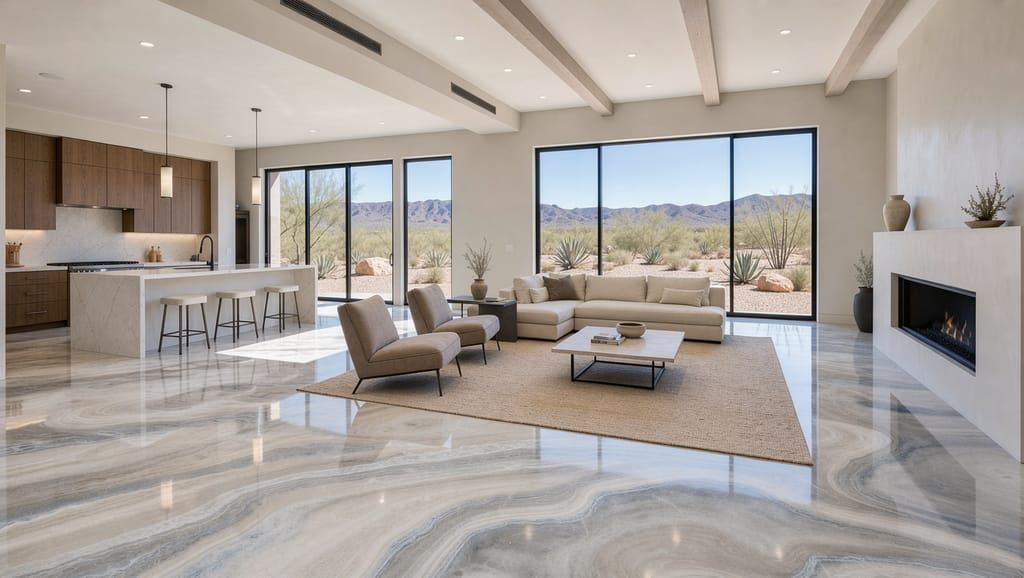
A metallic epoxy floor uses fine pearlescent and metallic pigments suspended in a clear, self-leveling epoxy. While the resin is still liquid, our installers work it with rollers, trowels, brushes and solvent techniques to move the pigments into swirls, veins, clouds and ripples. As the floor cures, those patterns lock in place, creating a three-dimensional surface with depth that changes as you walk across it and as light moves through the room.
No two metallic floors are ever the same. Even with identical colors and techniques, the way the pigment flows makes every floor unique. That is part of their appeal: a metallic floor is as much an art piece as it is a durable working surface.
Where metallic floors shine
Homes and casitas
In living rooms, casitas, game rooms and home theaters, a metallic floor creates an instant focal point. Soft pearl, silver and pale blue palettes feel calm and modern, while charcoal and copper blends feel rich and dramatic. Paired with the natural light common in Gilbert homes, metallic floors glow beautifully.
Showroom garages
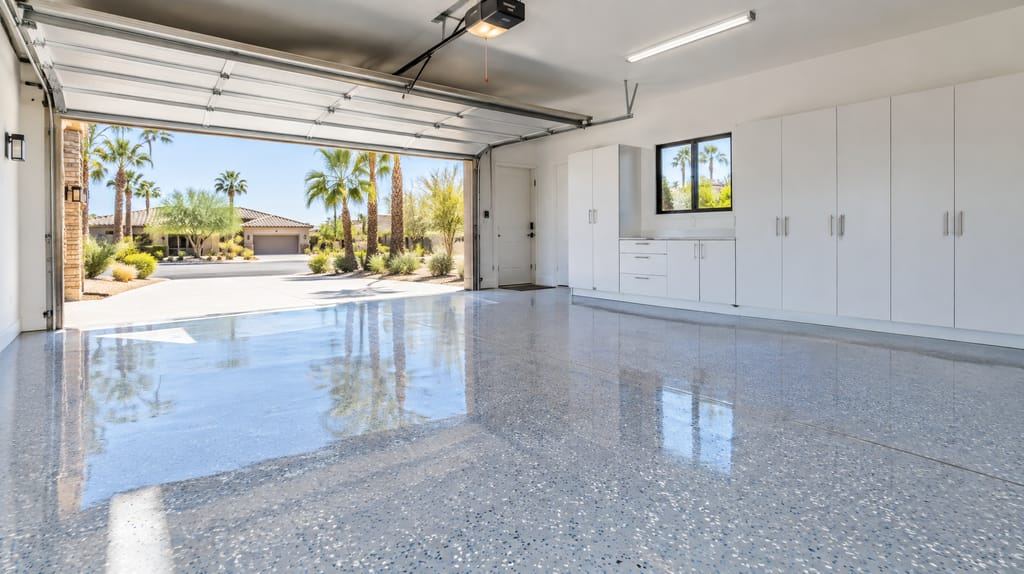
Car enthusiasts often choose metallic systems for display garages where vehicles are the centerpiece. The reflective floor makes paintwork pop and turns the garage into a true showroom.
Commercial and retail
Boutiques, salons, offices, restaurants, galleries and brand showrooms use metallic floors to make a memorable first impression. The seamless finish is easy to maintain and works with modern and industrial interiors alike. Learn more on our commercial epoxy flooring page.
Designing your metallic floor
Because metallic floors are custom, design is part of the process. We start by understanding the look you want and the way the space will be used.
- Color palette: choose one main color or blend two or three. Popular palettes in Gilbert include pearl white with silver, soft blue with white, charcoal with silver, and warm bronze tones for desert-inspired interiors.
- Pattern style: soft clouds, marble veining, lava-like flow, ocean ripples or a subtle low-movement finish. We can show examples of each.
- Sheen: high gloss maximizes depth and reflection. Satin softens glare and shows fewer scuffs, which some homeowners prefer for busy spaces.
- Traction: for kitchens, garages and commercial areas, we can add a fine clear aggregate to the topcoat for slip resistance without hiding the pattern.
We bring sample boards so you can see how pigments look in your own lighting. Natural daylight, warm LEDs and cool commercial fixtures all change how a metallic floor reads, so seeing samples on site is important.
Our metallic installation process
Preparation is everything
Metallic floors are glossy and reflective, so they reveal every flaw underneath. We diamond grind the slab, repair cracks and joints, and fill pits and low spots. For interior floors that need it, we apply a self-leveling underlayment to create a flat surface. This step takes time, but it is what separates a stunning metallic floor from a wavy, uneven one.
Primer and base coat
A penetrating primer seals the concrete and prevents outgassing bubbles. A tinted base coat follows, chosen to support the metallic colors above it. A dark base makes colors look deep and dramatic, while a light base creates brighter, airier tones.
Metallic body coat
The metallic epoxy is mixed with pigment and poured across the floor in a planned sequence. Our installers then work the surface to create movement, adding accent pigments where needed. This stage requires experience and a steady crew, because the working time is limited and the floor must be finished as one continuous pour.
Protective topcoat
Epoxy on its own can amber in sunlight, which matters in bright Arizona rooms and garages with open doors. We finish metallic floors with a UV-stable, abrasion-resistant urethane or polyaspartic topcoat that protects the pattern, preserves color and improves scratch resistance.
How durable is a metallic floor?
Metallic epoxy is a true resin floor system, not a paint or veneer. Once cured and topcoated, it handles foot traffic, furniture, pets and light vehicle traffic well. Like any high-gloss surface, it can show fine scratches from grit, so we recommend entry mats and felt pads under furniture. In high-traffic commercial spaces, the topcoat can be refreshed after several years to restore gloss without disturbing the metallic layer beneath.
Metallic floors and Arizona conditions
Large windows and sliding glass doors are common in Gilbert homes, and they bring in a lot of UV light. Without the right topcoat, epoxy can yellow over time. Our metallic systems always include a UV-stable topcoat for that reason. For garages, we also consider slab temperature and hot tire traffic when choosing the topcoat, and we may recommend a polyaspartic finish for added heat resistance.
Moisture vapor in the slab can cause bubbling under thick metallic coats, so we test before quoting and use moisture-mitigating primers when needed. These precautions protect your investment and keep the finish looking the way you designed it.
Timeline and care
A typical residential metallic floor takes three to four days, including prep, leveling if needed, the metallic pour and the topcoat. Light foot traffic is usually possible after 24 hours from the final coat, with furniture returning after about 72 hours. For care, use a microfiber dust mop daily and a damp mop with pH-neutral cleaner weekly or as needed. Avoid abrasive pads and harsh chemicals.
Popular metallic palettes for Gilbert homes
Gilbert interiors range from warm Tuscan and Spanish Colonial styles to crisp modern farmhouse and contemporary desert designs. Metallic floors can complement any of them when the palette is chosen thoughtfully.
- Pearl and silver: bright, clean and reflective. Ideal for modern homes with white cabinetry and large windows.
- Soft blue and white: calm and airy, with a water-like movement that pairs beautifully with pools visible through sliding doors.
- Charcoal and graphite: moody and dramatic, popular for home theaters, man caves and display garages.
- Bronze, copper and sand: warm, earthy tones that echo the desert landscape and suit traditional interiors.
- Gray and white marble: a classic veined look that imitates natural stone without the cost or seams.
We can blend two or three colors to create highlights and depth. Our team will help you choose a combination that works with your cabinets, countertops, wall colors and lighting.
What affects the final look
Several factors influence how your metallic floor turns out. The base coat color sets the overall tone. The amount of pigment determines how much shimmer and contrast you see. Installer technique creates the movement, and the topcoat sheen affects how much light reflects. Lighting is also critical. Warm bulbs bring out gold and bronze tones, cool lights emphasize silver and blue, and natural light makes the floor change throughout the day. We take all of these into account during the design discussion so the finished floor feels right in your space.
Metallic floors versus polished concrete and tile
Polished concrete offers a sleek look, but its appearance depends on the existing slab and often reveals patches, cracks and color variations. Large-format tile and stone look elegant but bring grout lines and higher costs. A metallic epoxy floor delivers a seamless, reflective surface with custom color and movement that neither option can match, and it can be installed over most existing slabs after proper preparation. It is also more forgiving of minor slab imperfections because the coating builds a new surface on top.
Why choose us for your metallic floor
- Careful leveling and preparation for a flat, reflective surface
- Experienced installers who plan and execute continuous pours
- UV-stable topcoats on every metallic system
- Sample boards and design guidance before you commit
- Options for slip resistance and satin sheens
A metallic floor is a chance to create something nobody else has. Request a free consultation with the form at the top of this page, and we will help you design a floor you will love walking on.