What is polyurea?
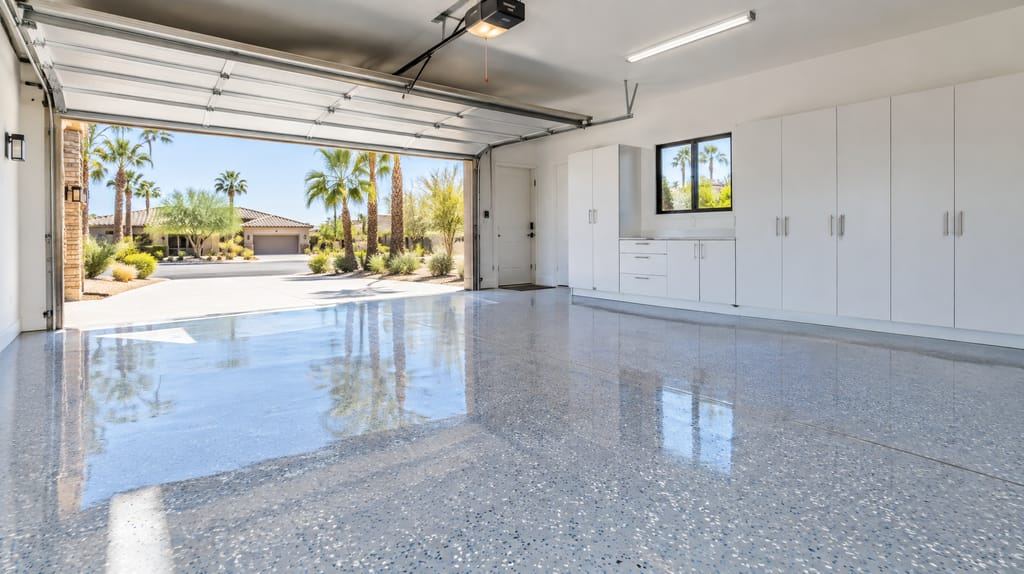
Polyurea is an elastomeric coating formed by the reaction of an isocyanate with an amine resin. The result is a tough, flexible film with outstanding tensile strength and elongation, meaning it can stretch and recover without cracking. Pure polyureas are used to line truck beds, protect tanks and waterproof structures, so they are built for demanding conditions. In flooring, polyurea is used primarily as a base coat that bonds tightly to concrete and absorbs the movement of the slab beneath it.
You will often hear polyurea and polyaspartic mentioned together. Polyaspartic is a member of the polyurea family that has been modified to cure more slowly and resist UV light. In many of our systems, a polyurea base coat provides the grip and flexibility, and a polyaspartic topcoat provides the color stability and wear surface.
Why flexibility matters in Gilbert
Concrete is not static. It expands as it heats and contracts as it cools, and in Arizona those swings are dramatic. A garage slab can be cool at dawn and well over 120 degrees by late afternoon when the sun hits a west-facing door. Patios in full sun can get even hotter. Over thousands of cycles, that movement puts constant stress on any coating bonded to the surface.
Rigid coatings can develop stress at the bond line, which over time can lead to cracking or delamination, especially near control joints and existing cracks. A flexible polyurea base distributes that stress, stretching slightly as the slab moves instead of fighting it. That is a big reason polyurea-based systems have become so popular in hot climates.
Key benefits of polyurea floor coatings
Exceptional bond to concrete
Polyurea base coats have low viscosity and penetrate into the open pores of diamond-ground concrete, creating a mechanical bond that is often stronger than the concrete itself. When properly installed, the concrete will typically fail before the bond does.
Flexibility and impact resistance
Because polyurea can elongate, it resists cracking from slab movement and absorbs impacts better than brittle coatings. Dropped tools, rolling jacks and heavy gym plates are less likely to chip the floor.
Fast cure
Polyurea cures quickly, which supports one-day installation schedules when paired with a polyaspartic topcoat.
Wide temperature tolerance
Polyurea systems perform across a wide temperature range and can be installed in conditions where some epoxies struggle.
Chemical and abrasion resistance
Once topcoated, polyurea systems resist oils, fuels, salts, fertilizers and many cleaning chemicals, and stand up well to vehicle and foot traffic.
Polyurea compared with epoxy
Epoxy is a rigid thermoset with excellent adhesion and high build. It is ideal for interior floors, metallic systems and areas where a thick, hard surface is important. However, epoxy is more brittle, can yellow in sunlight and cures more slowly. Polyurea is flexible, faster curing and better suited to slabs that see big temperature swings. Both are excellent materials, and the right choice depends on the space.
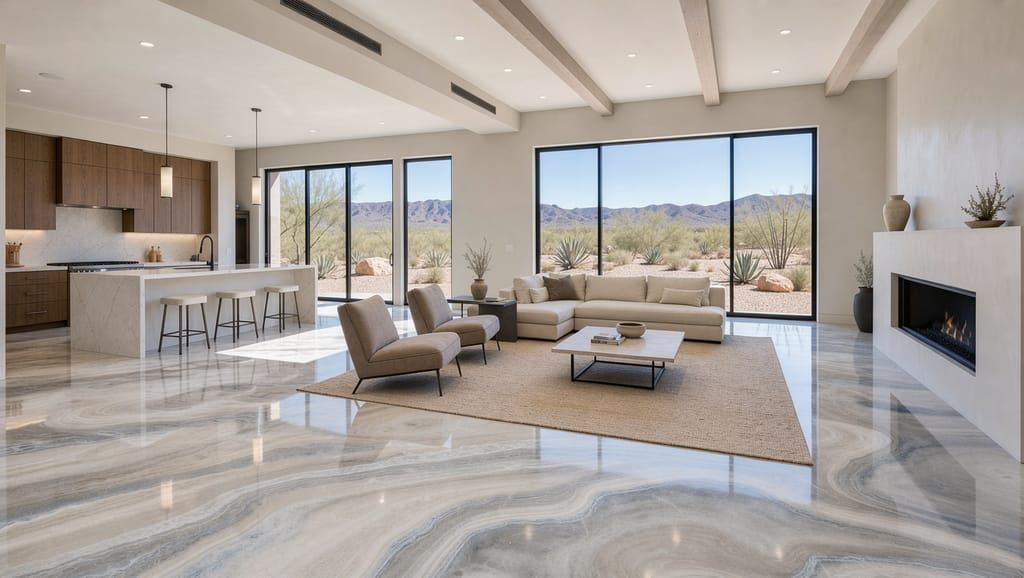
For most Gilbert garages and patios, we favor a polyurea or hybrid base coat with a polyaspartic topcoat. For interior living spaces, showrooms and metallic designs, epoxy body coats often make more sense. During your estimate, we will explain which chemistry we recommend and why.
Where polyurea systems work best
- Sun-exposed garages
- Covered and open patios
- Pool decks and walkways
- Slabs with existing cracking
- Workshops and auto bays
- Commercial entries
- Home gyms
- Loading areas
How we install polyurea floor systems
Assessment and testing
We start by inspecting the slab for cracks, joints, previous coatings and contamination. Moisture testing tells us whether a moisture-mitigating primer is needed. We also note sun exposure and how the floor is used, which affects the system we recommend.
Diamond grinding
Polyurea relies on penetration into open concrete, so proper grinding is essential. Our planetary grinders remove the weak surface layer and contaminants and create a consistent profile across the floor and along the edges.
Crack and joint repair
Cracks are chased and filled with flexible or rigid repair materials depending on whether they are still moving. Control joints may be filled or left as joints, and we discuss the best approach for your slab.
Polyurea base coat
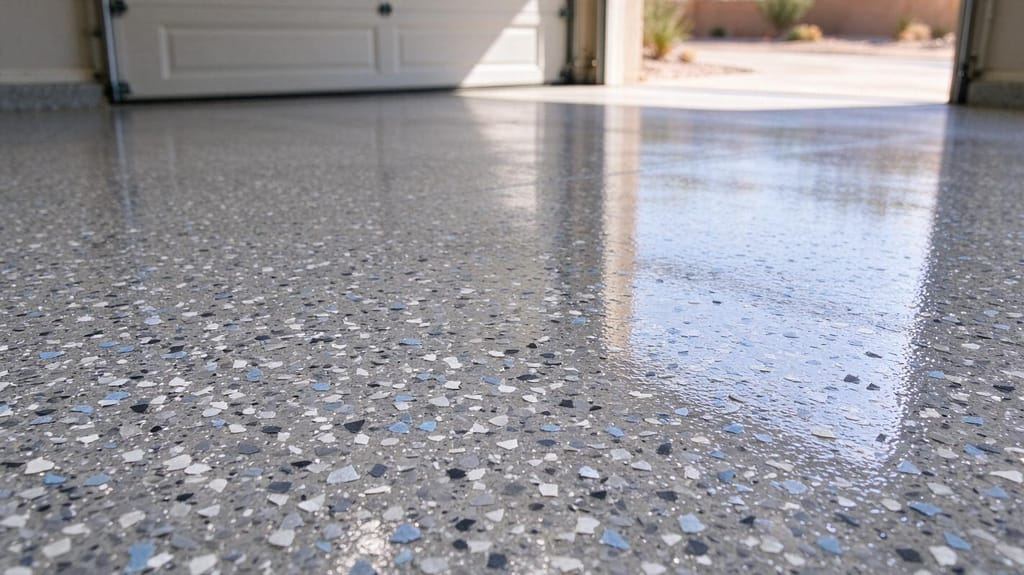
The base coat is applied in a pigmented color that complements your finish. If the system includes decorative flake, it is broadcast into the wet base coat.
Topcoat
Because some polyurea base coats are not UV stable on their own, we seal them with a clear polyaspartic topcoat. This layer adds gloss, color stability, chemical resistance and the option of anti-slip texture.
Is polyurea right for my slab?
Polyurea is a great choice for many floors, but it is not the answer for every situation. Slabs with high moisture vapor emissions may need a specialized epoxy primer first. Interior spaces where a perfectly flat, glassy finish is the goal may be better served by a self-leveling epoxy. Very fast cure times also require experienced installers who can keep up with the material. We will give you an honest recommendation based on what we find during the estimate, not a one-size-fits-all pitch.
Maintenance and long-term care
Polyurea systems are easy to maintain. Sweep or dust-mop regularly and wash with warm water and a mild cleaner. Rinse patios with a hose and a soft brush to remove dust and pollen. Clean up automotive fluids and pool chemicals promptly. In commercial or high-traffic settings, a periodic maintenance topcoat can renew gloss and protection without replacing the base system.
Polyurea and the hot tire problem
Hot tire pickup is one of the most frustrating failures a garage floor can have. When a hot tire sits on a coating, it softens slightly and the plasticizers in the rubber can migrate into weak or thin films. As the tire cools, it grips the coating, and when the car pulls out, it can pull the coating off the floor. The root cause is almost always poor bonding or an inadequate system. A polyurea base coat helps because it penetrates deeply into the ground concrete and forms a very strong mechanical bond. Combined with a hard, heat-resistant polyaspartic topcoat, the system resists the forces that cause pickup. This is especially important in Gilbert, where summer driveway and road temperatures are among the highest in the country.
Hybrid systems
Coating technology has advanced quickly, and many modern floors use hybrid chemistries that combine properties of polyurea, polyaspartic and epoxy. For example, a moisture-tolerant epoxy primer may be used on a slab with elevated vapor emissions, followed by a polyurea base and a polyaspartic topcoat. Each layer is chosen for the job it does best. We stay current with professional-grade products and build systems based on the actual conditions of your slab rather than relying on a single product for every floor.
Signs your floor would benefit from polyurea
- Your garage or patio receives direct afternoon sun
- The slab has a history of hairline cracking
- A previous coating peeled, especially under tires
- You need the floor back in service quickly
- The space is used for heavy equipment or impacts
If any of these apply, mention them when you request an estimate. We will inspect the slab and explain how a polyurea-based system would address them, along with any alternatives worth considering for your budget and timeline.
Why choose Gilbert Epoxy Flooring Pros
- Systems matched to Arizona heat, sun and slab movement
- Thorough diamond grinding and crack repair
- Polyurea and hybrid base coats with UV-stable topcoats
- Experienced crews comfortable with fast-cure materials
- Honest recommendations and detailed written quotes
Request a free estimate using the form at the top of this page. We will test your slab and help you decide whether a polyurea-based system is the right foundation for your floor. You can also compare options on our polyaspartic and garage floor coatings pages.